Table of Contents
Let’s be frank. First of all, the reason you bought a DSLR or mirrorless camera was to take better photos than you could on your phone or fire an old compact point’ n.’
So it makes sense to buy a 35 mm lens, or any other single focal length’ standard’ lens, first and foremost reason is to make it even better.
Having a prime lenses can instantly elevate your photography
The photographer and not the equipment make great photos. But at the same time, upgraded equipment allows you to take better photos than before. If not, no one would ever buy the better equipment.
This is perhaps never more true than with lenses, where an upgrade to a prime (whether 35 mm or otherwise) would usually see a bigger jump than you would get from switching to a newer camera but still using your own kit lens.
Kit lenses are designed to be a highly versatile jack-of-all-trades. This durability means that many people just stick with them. If not permanently, until they eventually discuss other possibilities.
This also means that kit lenses do not optically excel at any one aspect. Manufacturers have to worry about the zoom function, which means a compromise in the quality of the image.
As a prime lens has only one job–shooting at its single focal length–far more resources are put into the quality of the picture. It means that in your job you should assume more sharpness and fewer aberrations.
As we get into later, at the focal length of your prime lens you can also take advantage of wider apertures; be that 35 mm, 50 mm, or anything else.
In thinking about the right lens for travel photography, there are several possibilities.
On the one side, many photographers enjoy anything like a Nikon 24-70 mm f/2.8 G IF-ED zoom lens due to its versatility of focal length.
On the other hand, many photographers prefer a larger zoom — something like a Canon EF 24-105 mm f/4 L IS USM — for additional choices when taking wide-angle images.
So why 35mm lens?
There is certainly a lot to catch your eye in the sea of lens choices that are out there for your camera.
Wide-angle lenses, on the one hand, are perfect for landscapes. On the other hand, for sports or wildlife shooting, telephoto lenses are good to have.
There is also plenty to enjoy about a good 50 mm lens, as they are often very cheap, but offer plenty of flexibility for everything from portrait to macro work.
But there’s another lens, an old style you can find your camera bag to be a great addition:
the 35 mm.
Let’s go over some of the best reasons why a 35 mm lens is required.
Is 35mm a good travel lens?
In fact, I now shoot well over 70 percent of my travel images with my 35 mm and 21 mm lenses. But, for good reason, 35 mm is still the favorite. A 35 mm lens is wide enough for pictures and street photography. It’s also ideal for atmosphere portraits, which (for me) is basically 80% of all travel photography.
Let’s discuss several reasons why a 35 mm lens is a perfect option to photograph your travels.
What ‘s good for 35 mm lens?
The 35 mm lens can be used for almost anything: landscapes, portraits, travel shots, macro photography, street photography, real estate photography, product photography.
1. The common lens type
Viewing a scene through an ultra-wide-angle lens such as a 12 mm or a super-telephoto lens such as a 400 mm renders a scene foreign to the naked eye. We see a much broader viewing angle in the former; in the latter, a much narrower viewing angle.
But you get a picture with a 35 mm lens, which closely mimics what you see with your own eyes.
Think about it – on 35 mm film, several films are shot because it offers a familiar and realistic point of view to the viewer.
The same applies to portraits…
In the images you make, a 35 mm prime lens like the Nikon Nikkor 35 mm f/1.4 G AF-S shown below will give you realistic-looking results.

A good balance between the two is the 35 mm lens.
As mentioned above, a 35 mm lens produces an image that is enjoyable to see as it closely resembles our own field of vision.
But beyond that, without the wide-angle distortion of a true wide-angle lens, you can take portraits, and you can take pictures of all kinds and arrange them in tight spaces without losing much of the image, as with a 50 mm lens.
2. A 35mm lens captures just enough wide-angle shots
When traveling, one of the most popular photo subjects is the landscapes you encounter. When photographing landscapes, a wide-angle lens is best.
Is 35mm good for landscape?

When photographing landscapes, a wide-angle lens is best. What’s good about 35 mm shooting, it’s wide, but not too wide. That is, rather than distorting the landscape as an ultra-wide-angle lens does, a 35 mm lens catches the landscape with your own eyes.
The photos you take with a 35 mm lens look right and are comfortable to see.
If you use a 35 mm lens on a crop sensor camera, that view is limited to a standard focal length. Even on a crop sensor camera, a 35 mm lens is a great option for travel photography.
3. 35mm lens is good for portraits

As mentioned above, just because 35 mm lenses are perfect for landscapes doesn’t mean they’re only meant for landscapes, a 35 mm lens is also a perfect portrait lens.
One of the key reasons for this is that you can take environmental portraits of your subject with more of the scene in the picture.
Instead of getting close for a headshot or half-body shot, a 35 mm lens helps you to get a full-body portrait while catching the scenery around the model.
When traveling, catching people and locations in the same shot is extremely useful. And, as noted earlier, without the huge distortion you get when shooting a wider lens, you’ll get the wide-angle view.
Why 35mm is the best focal length?
35 mm is the focal length closest to the field of view we see through the human eye, depending on who you ask. … These 35 mm lenses are usually fairly distortion-free, yet being large enough to catch a scene and allowing you to get closer to a more conventional portrait.
How far can a 35mm lens see?
You can focus closer than the 50 mm lens with a 35 mm lens. Next, the broader field of view allows deeper field depth. Field depth is the distance from the focus. Focus a 50 mm lens at f1 to 10 feet.
4. 35mm Prime Lenses are Small and Light to take when you travel
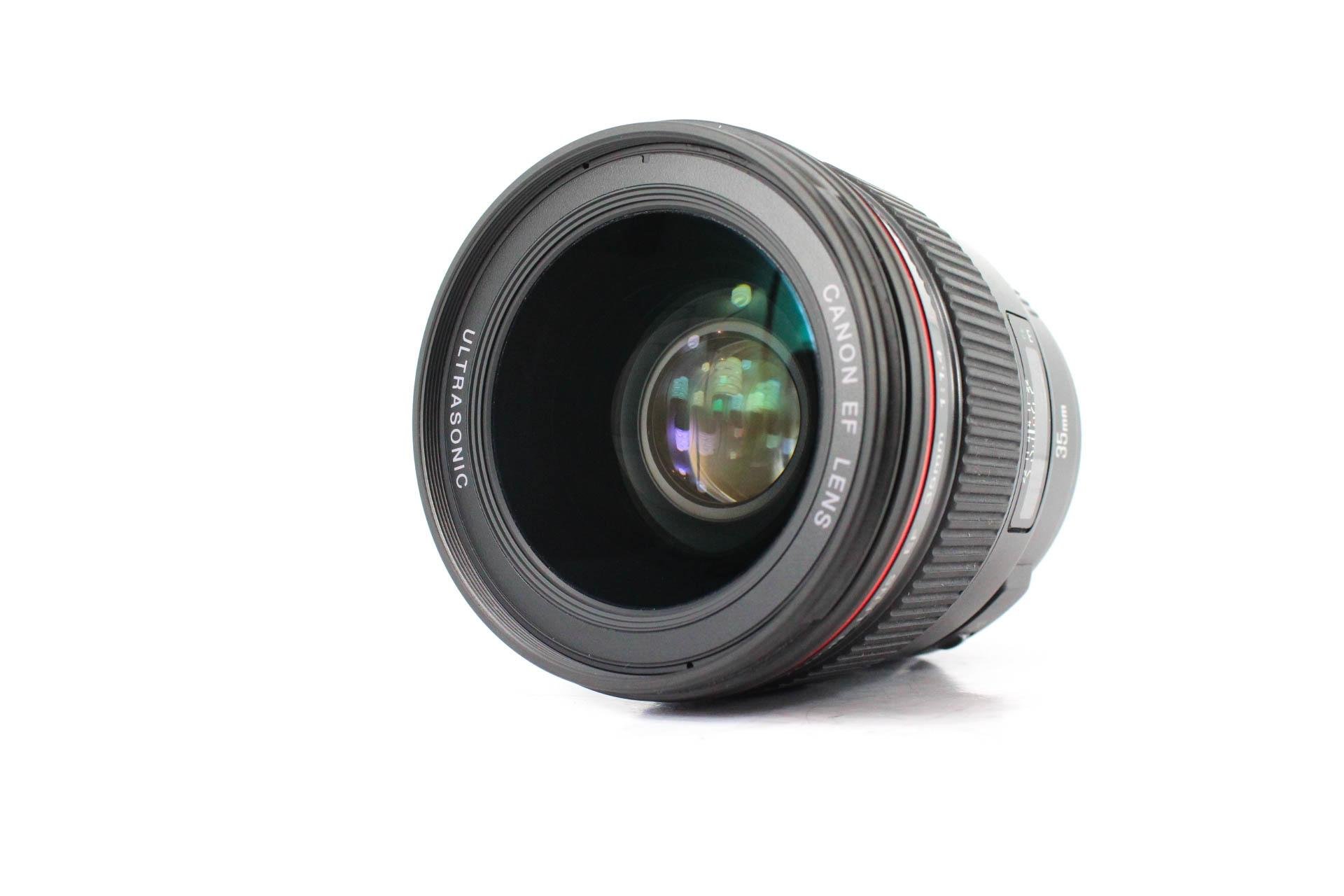
Compared to other prime lenses like 50 mm f/1.4 or 85 mm f/1.2, a 35 mm f/1.4 is relatively small and light.
That’ll come in handy again and again as you travel, because a ton of heavy gear is the last thing you want to be carrying around. The smaller form factor is perfect to work your way through busy streets, while the lightweight structure will be much appreciated as the exploring hours and hours begin.
And since it’s such a versatile lens, you can take nothing but your 35 mm f/1.4 with you.
5. 35mm Lenses + Filters = Perfection
For travel photography, as nice as 35 mm lenses, if you pair them with high-quality lens filters, you get a more robust result.
How much do you experience bright skies over darker environments while you’re traveling?
Short of bracketing your exposures or combining several exposures, you’re either left with a well-exposed sky and too dark a landscape, or a well-exposed and too bright sky. However, if you use a graduated neutral density filter, this problem is solved in-camera.
Since the top of a graduated ND filter is darkened, it blocks some light from the bright sky, allowing your camera to catch the scene’s dynamic range.
That means you can get a single, well-exposed picture right there and there, no need to process the image later for exposure levels. Using high-quality, graduated ND filters like Formatt-Hitech filters, you get even better results.
This thing is available in 1 to 5 stop densities, so you’re sure to get the exact amount of light-blocking power you need. Likewise, these professional-grade filters are bonded to protect the filter’s coating, improving long-term durability. That means you’ll last a nice, long time when you invest in one of these filters.
As if all that’s not good enough, Formatt-Hitech’s Firecrest Ultra filters are made with a lap and polish technique that gives the filter outstanding neutrality, transparency and sharpness.
In other words, using a graduated ND filter, you can capture not only better-exposed images, but also images that are transparent, sharp, and have loads of effect.
6. Lots of different 35mm options
As if these aren’t good enough excuses to snag your next trip with a 35 mm f/1.4 lens, there’s plenty of decent 35 mm lenses out there!
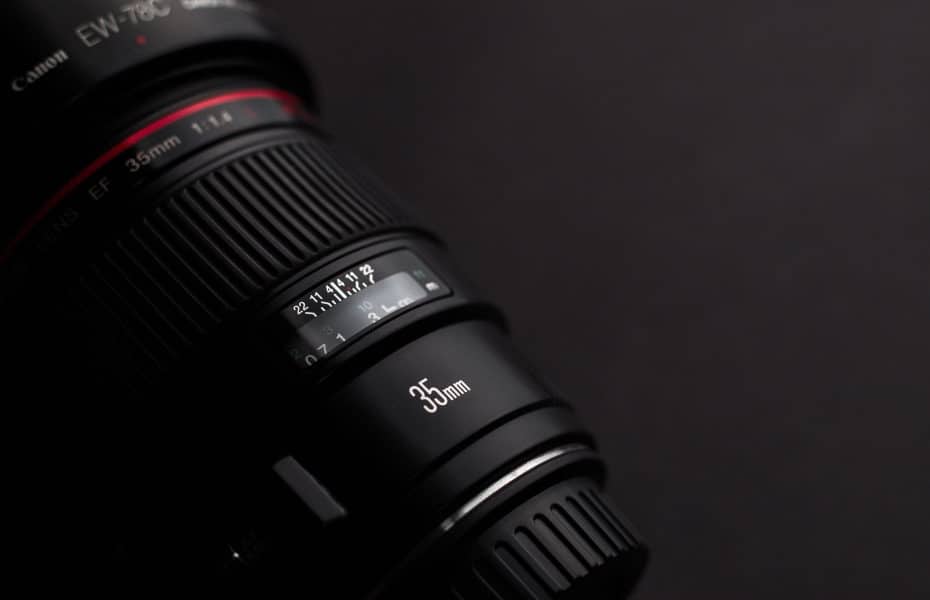
You can use Canon EF 35mm f/1.4 L USM II or If you’re a Nikon shooter, pick from lenses like the 35mm f/1.4G below or the

And there’s plenty of options for Sony, Fuji, Pentax, and shooters with other camera brands.
Better still, in addition to a large range of possibilities, you will find great discounts on used lenses to get a better lens for less money.
For me, there’s no better deal than that! Scroll down to the bottom of the page for more 35mm prime lens options
Conclusion
Generally speaking, the quicker the lens is, the more costly it will be at a given focal length. This means a f1.4 of 35 mm would cost more than a f1.8 of 35 mm.
Lower f-numbers will help you achieve even more blurred backgrounds and improve performance in low light, but it’s something you’ll have to determine for yourself whether they’re required for a first-time purchase of prime lens.
I think it’s too much for me personally to jump to 35 mm f1.4, so I’d probably go to f1.8. If that’s what your budget always offers you, you’ll always love what you get for the money, and you’ll find a huge difference in your kit lens results.
In other words, the 35mm lens is simply a well-rounded, versatile, and dependable piece of glass.
Can it do everything? No…
But can it do a whole lot of things well? You bet!
Find out more about why you need a 35mm lens in the video above by DigitalRev TV.
35mm Prime lens FAQ (MOST frequently asked questions)
Is a 35mm DX lens actually 35mm?
Lenses, DX or FX, determine their focal length, not their field of view. A 35 mm focal lens has some field of view on a full frame (FX) sensor and another field of view on a crop (DX) sensor, but in all cases the focal length is still 35 mm.
Should I buy 50mm or 35mm?
Take a read of my article on both to decide which one you should buy.
Which is better 24mm or 35mm?
The 24 mm gives you a little more scope and could be useful, but you’d be better with a 35 mm for most scenes and scenarios. It’s not so big you capture lots of unnecessary background components, but it’s not so tight you can’t see your surroundings.
Which is better 28mm or 35mm?
These days, 28 mm focal lengths can be very similar to a subject because many people enjoy taking pictures of their food. … A 35 mm focal length helps you to focus more on food and replicate the human eye much better than a 28 mm lens.
Which is better 35mm or 85mm?
If you’re looking for a new portrait lens, consider this. Popular focal lengths include 85 mm, but 50 mm and 35 mm lenses have improved in portraiture in recent years. They have less distortion and, overall, look more pleasant.
Why is 35 mm so costly?
The reason the 35 mm lens is more expensive is because of the SLR’s flange-to-sensor size. The SLR requires a mirror box between the lens mount and the movie or sensor. Mirrorless bodies have a major advantage in wide-angle lenses, the lens design can be simpler and smaller.
Which Nikon 35mm lens is best?
- Number 1 Pick: Sigma 35mm F1.4 Art DG HSM.
- Best for Budget: Nikon AF-S NIKKOR 35mm f/1.8G ED.
- Tamron AFF012N-700 SP 35mm F/1.8 Di VC USD.
- Nikon AF FX NIKKOR 35mm f/1.4G.
- Carl Zeiss 2111-637 Milvus 35mm F/1.4 ZF.2.
Looking for Canon 35mm lens?
Canon provides a few excellent options for seekers with 35 mm. The EF 35 mm f/1.4L II USM is one of its newest lenses, which is definitely the most advanced and high-end choice for Canon shooters. If that’s too pricey, Sigma is making the 35mm f/1.4 DG HSM Art that will certainly please everyone. It is difficult to beat the EF 35 mmf/2 IS USM, which is one of the few large primes with stabilization, for a more mid-range choice. Canon’s EF mount is filled with options, but it will be difficult to beat Samyang 35mm f/1.4 AS UMC if you need something affordable.
Which Canon 35mm lens is best?
- Number 1 Pick: Sigma 35mm f/1.4 DG HSM Art
- Best for Budget: Samyang 35mm f/1.4 AS UMC
- Canon RF 35mm f/1.8 MACRO IS STM.
- Canon EF 35mm f/2 IS USM.
- Tamron SP 35mm f/1.4 Di USD.
Which Sony 35mm lens is best?
- Number 1 Pick: Sigma 35mm f/1.2 DG DN Art
- Best for Budget: Samyang AF 35mm f/2.8 FE
- Sony Distagon T* FE 35mm f/1.4 ZA.
- Sigma 35mm f/1.4 DG HSM Art.
- Sony FE 35mm f/1.8.